
Bestsellers
-
 Tank, Light, Mk VI
 £6.99
£6.99
-
 Opel Blitz Truck
£9.99
Opel Blitz Truck
£9.99
-
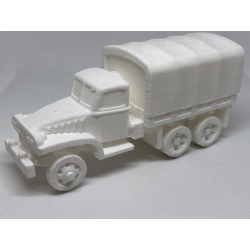 GMC CCKW 2½-ton 6x6 truck (swb & lwb)
 £8.99
£8.99
-
 Universal Carrier (Bren Gun Carrier)
£6.99
Universal Carrier (Bren Gun Carrier)
£6.99


Latest Products
-
 Camionetta SPA-Viberti AS43 Reconnaissance Car
£6.99
Camionetta SPA-Viberti AS43 Reconnaissance Car
£6.99 -
 Autoblindo Fiat-Ansaldo AB611 armoured car
£8.99
Autoblindo Fiat-Ansaldo AB611 armoured car
£8.99 -
 Autoblindo Fiat-Ansaldo 40, 41 and 43 armoured cars
£7.99
Autoblindo Fiat-Ansaldo 40, 41 and 43 armoured cars
£7.99 -
 Aufklarer auf Fgst Panzer Pzkpfw 38(t)
£9.99
Aufklarer auf Fgst Panzer Pzkpfw 38(t)
£9.99 -
 Marder III
£10.99
Marder III
£10.99 -
 Nissan 180 Truck
£8.99
Nissan 180 Truck
£8.99 -
 Type 98 Ke-Ni light tank
£7.99
Type 98 Ke-Ni light tank
£7.99 -
 Otsu-Gata Sensha (Renault NC in Japanese Service)
£7.99
Otsu-Gata Sensha (Renault NC in Japanese Service)
£7.99


T-34 Variants
£8.99
The T-34 is a Soviet medium tank that had a profound and lasting effect on the field of tank design. At its introduction, the T-34 possessed an unprecedented combination of firepower, mobility, protection and ruggedness. Its 76.2 mm (3 in) high-velocity tank gun provided a substantial increase in firepower over any of its contemporaries;[5] its well-sloped armour was difficult to penetrate by most contemporary anti-tank weapons. When it was first encountered in 1941, German general Paul Ludwig Ewald von Kleist called it "the finest tank in the world"[6] and Heinz Guderian affirmed the T-34's "vast superiority" over existing German armour of the period.[7][8] Although its armour and armament were surpassed later in the war, it has often been credited as the most effective, efficient and influential tank design of the Second World War.[9]
The T-34 was the mainstay of Soviet armoured forces throughout the Second World War. Its design allowed it to be continuously refined to meet the constantly evolving needs of the Eastern Front: as the war went on it became more capable, but also quicker and cheaper to produce. Soviet industry would eventually produce over 80,000 T-34s of all variants, allowing steadily greater numbers to be fielded as the war progressed despite the loss of tens of thousands in combat against the German Wehrmacht.[10] Replacing many light and medium tanks in Red Army service, it was the most-produced tank of the war, as well as the second most produced tank of all time (after its successor, the T-54/55 series).[11] At 44,900 losses during the war, it also suffered the most tank losses of all time.[12] Its development led directly to the T-54 and T-55 series of tanks, which in turn evolved into the later T-62, T-72, and T-90 that form the armoured mainstay of many modern armies. T-34 variants were widely exported after World War II, and in 2010 the tank remained in limited front line service with several developing countries.
The T-34 was the mainstay of Soviet armoured forces throughout the Second World War. Its design allowed it to be continuously refined to meet the constantly evolving needs of the Eastern Front: as the war went on it became more capable, but also quicker and cheaper to produce. Soviet industry would eventually produce over 80,000 T-34s of all variants, allowing steadily greater numbers to be fielded as the war progressed despite the loss of tens of thousands in combat against the German Wehrmacht.[10] Replacing many light and medium tanks in Red Army service, it was the most-produced tank of the war, as well as the second most produced tank of all time (after its successor, the T-54/55 series).[11] At 44,900 losses during the war, it also suffered the most tank losses of all time.[12] Its development led directly to the T-54 and T-55 series of tanks, which in turn evolved into the later T-62, T-72, and T-90 that form the armoured mainstay of many modern armies. T-34 variants were widely exported after World War II, and in 2010 the tank remained in limited front line service with several developing countries.
-
 Panzer III N
£9.99
Panzer III N
£9.99 -
 Panzer VI Tiger I
£11.99
Panzer VI Tiger I
£11.99 -
 Sturmgeschütz III G (StuG III G) assault gun
£9.99
Sturmgeschütz III G (StuG III G) assault gun
£9.99 -
 Panzer IV G
£9.99
Panzer IV G
£9.99 -
 Sturmgeschütz III A, B, C, E, F (StuG III) assault gun
£9.99
Sturmgeschütz III A, B, C, E, F (StuG III) assault gun
£9.99 -
 Panzer V Panther A
£11.99
Panzer V Panther A
£11.99 -
 Panzer V Panther D
£11.99
Panzer V Panther D
£11.99 -
 Panzer V Panther G
£11.99
Panzer V Panther G
£11.99 -
 Tiger II Königstiger
£13.99
Tiger II Königstiger
£13.99 -
 MG42 Machinegun
£0.99
MG42 Machinegun
£0.99


